
Winter Security Checklist: Is Your Property Ready for Longer Nights?
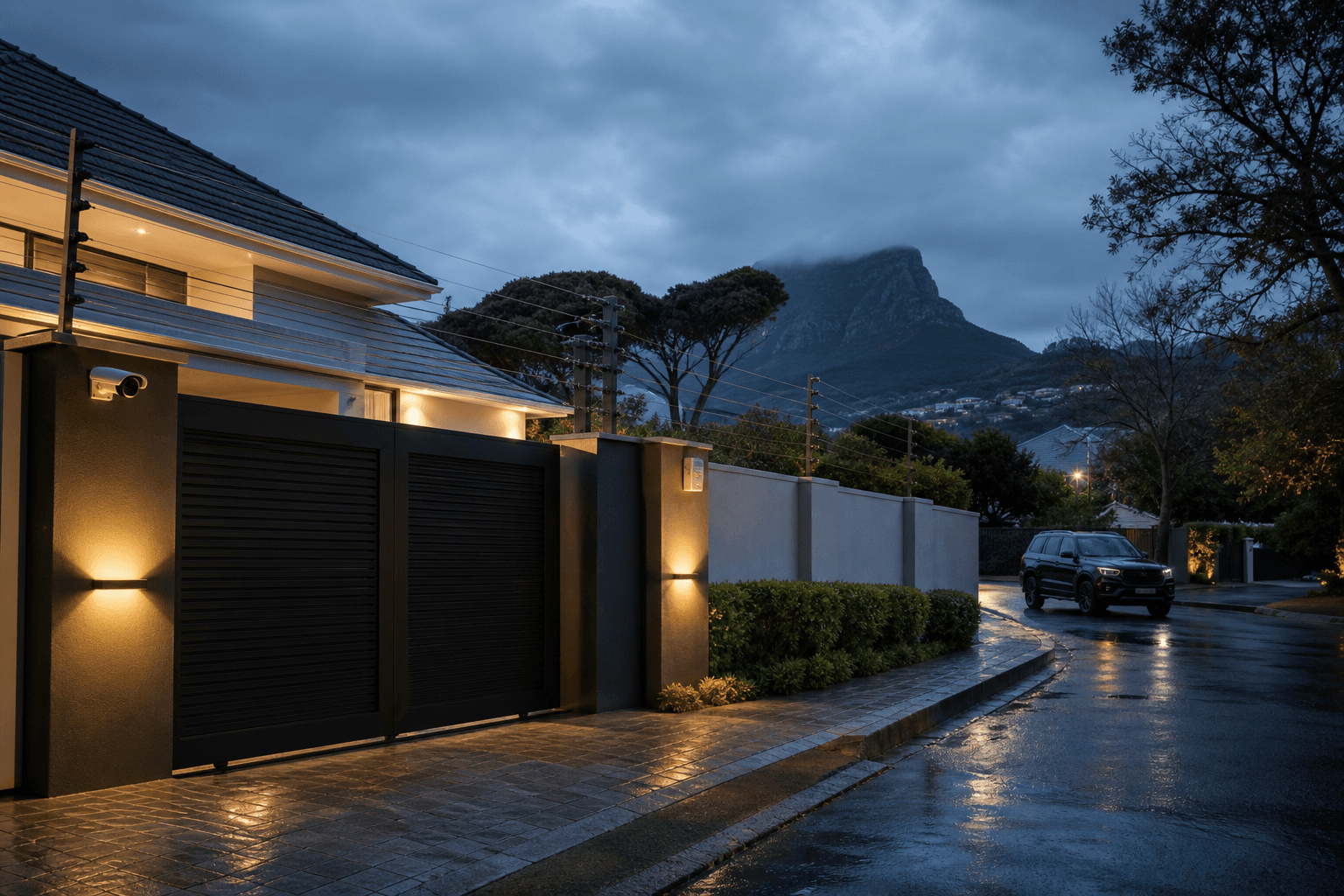
Winter in Cape Town brings longer hours of darkness, wet weather and colder evenings. These seasonal changes do not automatically make a property unsafe, but they can reveal weaknesses in a security setup that seemed fine during summer.
Outdoor lights may no longer cover every dark area. Rain and wind can affect camera views, electric fencing and outdoor sensors. Alarm batteries may also be placed under extra strain when the electricity supply is interrupted.
A winter security review is a practical opportunity to find these gaps before they affect your home or business.
Start with your alarm backup battery
An alarm system needs reliable power to detect an intrusion and communicate with the control room. During an electricity outage, most systems depend on a backup battery.
SAIDSA explains that repeated power failures and full discharges can reduce the working life of alarm batteries. A battery may appear normal while mains power is available but fail sooner than expected during an extended outage.
Ask your security provider to test the battery under load rather than relying only on the panel's normal display. If the system shows a low-battery or fault warning, report it promptly.
Check gates and garage doors during an outage
Motorised gates and garage doors also rely on backup power. Eskom notes that units with battery backup should retain enough capacity for a limited number of operations during an outage.
Test that your gate and garage door open and close correctly on battery power. Everyone who needs access should also know how the approved manual release works. Keep release keys secure and never leave them in an obvious outdoor hiding place.
Review outdoor lighting after sunset
Winter is the best time to assess lighting because you can see how the property looks during the hours when it is most often occupied.
Walk around the property from a safe position and check:
- Driveways and pedestrian gates
- Garages and side passages
- Rear doors and service entrances
- Parking areas
- Boundary walls and fence lines
- Areas around bins, sheds and outbuildings
The South African Police Service recommends exterior security lighting while warning homeowners to consider shadows and blind spots. Lights should improve visibility without shining directly into cameras or making it difficult to see out of the house.
Clean and test CCTV cameras
Rain, wind and dirt can reduce the clarity of outdoor camera footage. Water droplets on a lens cover may distort an image, while growing plants can gradually block a view.
Check each camera during the day and after dark. Confirm that the image is clear, the time and date are correct, recordings are being saved, and important areas remain visible. If your system uses video analytics, test alerts according to the installer's instructions.
Do not climb onto wet roofs or ladders to clean a camera. Ask a qualified technician to service equipment that cannot be reached safely.
Inspect outdoor beams and electric fencing
Branches, wet foliage and storm debris can interfere with outdoor detection or make contact with electric fencing. After severe weather, visually inspect the perimeter from a safe distance.
Look for vegetation touching fence wires, damaged insulators, leaning posts, warning lights on the energiser, or new objects blocking an outdoor beam. Electric fencing is specialised equipment and should be repaired by a suitably qualified installer. Never touch or attempt to adjust a live fence.
Keep entrances visible and secure
Dense bushes near gates can reduce visibility and create hiding places. SAPS advises property owners to clear bushes around gates and keep doors, windows and security gates locked.
Trim vegetation where necessary, but avoid creating new blind spots for cameras. Check that locks, intercoms, gate motors and door contacts still work correctly after exposure to winter rain.
Test panic buttons and update contacts
A panic button is only useful if it works and can be reached quickly. Test fixed and remote panic buttons with the control room by arranging the test in advance. Do not trigger a live panic signal without first following your security provider's testing procedure.
Confirm that the control room has the correct:
- Primary and alternative phone numbers
- Emergency contacts and keyholders
- Property access instructions
- Business opening and closing times
- Information about pets or other relevant hazards
Make sure family members or staff know who to contact and what to do when an alarm activates.
Do not overlook winter fire safety
Security also means protecting people from household hazards. Heaters, fireplaces, electric blankets and candles require extra care during cold weather.
In its winter safety guidance, SAPS advises residents to extinguish fireplaces and switch off heaters before bed, avoid sleeping with candles burning, test smoke alarms and avoid overloading plugs with heating appliances.
Keep heating equipment away from curtains, bedding and other combustible materials, and follow the manufacturer's operating instructions.
A practical winter security checklist
- Test the alarm and its backup battery.
- Confirm that gate and garage batteries work during an outage.
- Check exterior lighting for shadows and blind spots.
- Review CCTV images during daylight and at night.
- Clear vegetation from cameras, beams, gates and fence lines.
- Arrange repairs to damaged electric fencing or outdoor sensors.
- Test panic buttons with the control room.
- Update emergency contacts and access instructions.
- Check locks, intercoms and door contacts.
- Review safe use of heaters, fireplaces and electrical outlets.
Security works best when deterrence, detection, visibility and response support one another. A seasonal review helps ensure that every layer is ready when conditions change.
For assistance with alarm systems, CCTV monitoring, electric fencing, armed response or a review of your current security setup, contact Premier Security on 021 701 9955.
Your Security Is Our Business.