
What Happens When Your Home Alarm Goes Off? A Guide for Cape Town Homeowners
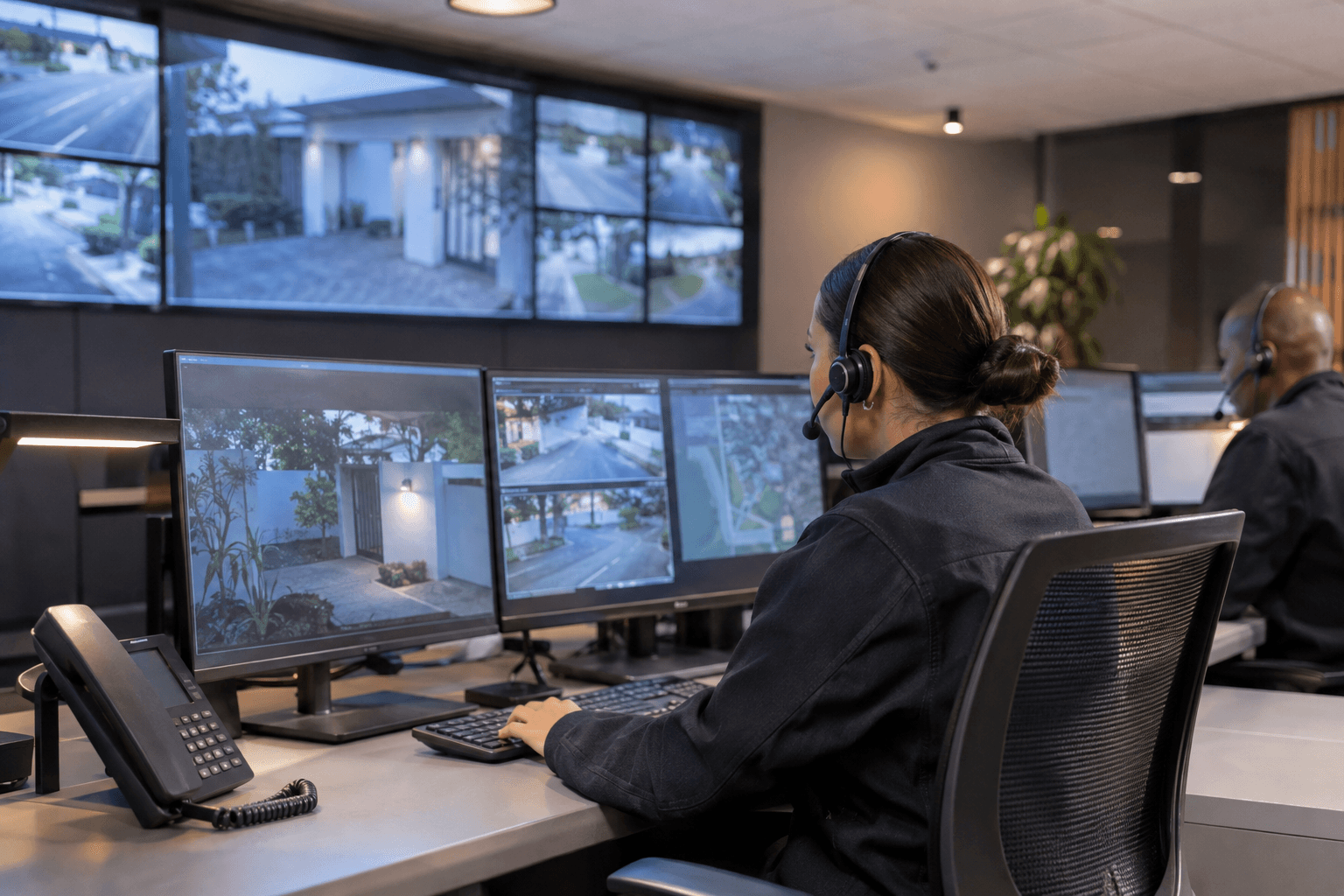
When a home alarm goes off, the signal may reach a security control room for review and follow-up. The control room may contact you to verify the activation. If you cannot be reached, or if a property check is requested, a response vehicle may be dispatched according to the circumstances and the information held for your property.
The exact sequence can differ between properties and alarm systems. An activation does not automatically mean that a vehicle is dispatched, and no response process should be understood as a guaranteed response time. Here is what Cape Town homeowners should know about the stages that may follow an alarm signal.
What happens when an alarm signal reaches the control room?
Your alarm system detects an event and sends a signal through its communication arrangement. The control room receives information associated with the activation, such as the property account and the relevant alarm zone or device, according to the system and monitoring setup.
The signal is a starting point for assessment. It does not, by itself, explain whether someone has entered the property, whether a sensor has been triggered by an environmental issue or whether a household member has accidentally activated the alarm. The control room uses the information available for the property to decide what follow-up may be appropriate.
How may the control room verify an activation?
After an alarm activation, the control room may contact the client using the telephone details held for the property. This conversation can help establish whether the activation was expected, whether someone is at the property and whether a property check has been requested.
Verification is not a promise that every activation will be handled identically. The available contact information, the type of signal, the circumstances reported by the client and the monitoring arrangement all matter. If you receive a call about an alarm, answer calmly and follow the monitoring company's instructions.
What if the homeowner cannot be reached?
If the control room cannot reach the client, the next step depends on the circumstances and the information held for the property. A response vehicle may be dispatched to check the property, particularly where a property check is needed or requested through the relevant response arrangement.
This is why an unanswered call should not be treated as an automatic promise of dispatch, and why homeowners should keep their account information current. A monitoring company needs accurate details about the people who can be contacted and the people who may be able to provide access or context.
When may a response vehicle be dispatched?
A response vehicle may be dispatched when the circumstances call for a property check, including where the client cannot be reached or asks for the property to be checked. Dispatch decisions depend on the available information and the service arrangement for the property.
Premier Security describes Armed Response as a service connected to alarm monitoring. Its Armed Response and alarm monitoring service explains that a vehicle may be dispatched according to the circumstances and information held for the property. It is important not to assume that every alarm, test signal or camera event produces the same response.
What may response officers check at the property?
When a response officer attends for a property check, they may inspect the accessible exterior and look for signs of suspicious activity or damage. The precise checks depend on the property, the information available and what the officer can safely observe.
A property check is not the same as a guarantee that every part of a property has been searched or that an incident has been resolved. If there are signs of forced entry or another immediate danger, do not place yourself at risk by entering. Follow the instructions of the control room and the relevant emergency services.
How can CCTV provide useful additional information?
CCTV can add situational information to an alarm signal. Images or monitored camera information may help personnel understand what is happening near an entrance, driveway or other monitored area. This can help provide context for a property check.
CCTV does not replace alarm monitoring, and it does not mean that every camera is continuously watched or that every event results in a dispatch. Premier Security's CCTV installation and monitoring service explains that the appropriate arrangement depends on the property, camera system and monitoring requirements.
Why current contact, keyholder and access details matter
Keep the following information current with your monitoring company:
- Primary and secondary telephone numbers
- People who should be contacted about an activation
- Authorised keyholders and their current availability
- Gate, access-control and safe-entry instructions
- Recent changes to the property, household or business use
Out-of-date details can make it harder to establish what is happening or how an authorised person may assist. Access instructions should be accurate but should also be shared through the secure process provided by your monitoring company. Do not publish private access codes or customer-specific details in a public message.
What should homeowners do after an alarm activation?
- Check that household members are safe without entering a location you suspect may have been breached.
- Answer calls from the control room and follow the instructions provided.
- Tell the control room if the activation was accidental, expected or connected to a known fault.
- Do not reset, test or repeatedly trigger the alarm unless the monitoring company tells you how to do so.
- Arrange an inspection if the system shows a fault, a detector is damaged or false activations recur.
- Update contact numbers, keyholders and access instructions after any household or property change.
If you need help with an alarm installation or maintenance requirement, see Premier Security's alarm systems service. For a broader assessment of security options, you can review the security systems service or contact Premier Security to discuss your property.
Frequently asked questions
What happens when my home alarm goes off?
The signal may reach a control room, where the activation can be reviewed and the homeowner may be contacted. A response vehicle may be dispatched if a property check is needed, but not every activation follows the same sequence.
Will a response vehicle always be dispatched?
No. Dispatch depends on the circumstances and the information held for the property. An alarm signal should not be treated as a promise of automatic dispatch or a guaranteed response time.
Why do my contact and keyholder details matter?
Current details help the control room contact the right people and understand how an authorised property check may be handled. Update them when phone numbers, keyholders or access arrangements change.
Can CCTV help after an alarm activation?
Where CCTV information is available, it may help personnel understand what is happening at the property. It provides useful context but does not replace alarm monitoring or guarantee a dispatch.
What should I do after an activation?
Follow the monitoring company's instructions, confirm that people are safe, avoid entering if you suspect a break-in and report any alarm fault or changed property information.
A well-maintained alarm system, accurate contact information and a clear understanding of the monitoring process can help you respond more calmly when an activation occurs.